
Tax measures related to the current flood disaster
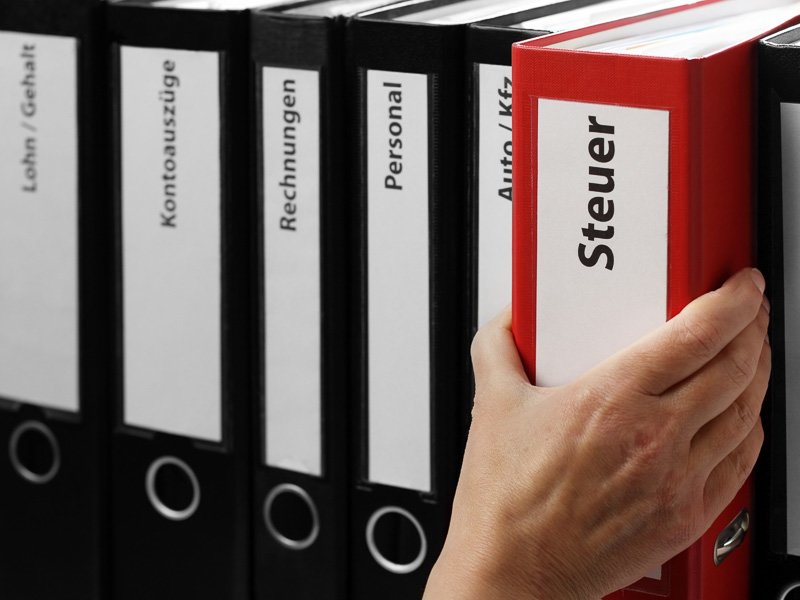
In connection with natural disasters, particularly flood damage, there are special tax regulations, which are briefly outlined below. It remains to be seen whether, as with previous natural disasters, further tax measures will be introduced, such as the possibility of accelerated depreciation in connection with disaster-related replacement acquisitions.
Relief with tax (back) payments
If tax debts are not paid on time due to a natural disaster, the tax office may refrain from charging late payment penalties and surcharges, either in full or in part. It is recommended to contact the tax office.
Humiliation Normally, applications to reduce income and corporate tax prepayments can be made until 30 September of a given year. Due to the disaster, this deadline could be extended again to 31 October.
Tax treatment of monetary and in-kind donations in disaster situations for the donor
Donations of up to 10% of the profit for the relevant financial year, before taking into account any profit allowance, made to organisations that provide assistance in the event of disasters and are recognised as eligible recipients of donations (see recommended links) may be claimed as business expenses.
Monetary or in-kind donations made in connection with disaster relief (in particular flood, landslide, mudflow, and avalanche damage) are tax-deductible as business expenses within the scope of corporate advertising expenditure. An advertising effect (for the company) is, for example, achieved with a donation notice on the homepage.
Donations made by private individuals (up to 101% of income) may be claimed as special expenses. As is generally the case, it is important to note that a specific donation may be claimed either as a business expense or as a special expense, but not both.
The provisions of the Gift Registration Act must be observed: The obligation to report donations exceeding €50,000 to relatives or exceeding €15,000 to other individuals to the tax office applies regardless of whether the donation is tax-deductible or not.
Tax exemption for voluntary donations to alleviate disaster damage
Cash or in-kind donations for the repair of damage caused by a disaster are tax-free for the recipient. This includes donations from an employer to their employees in the event of a disaster (e.g., interest-free or subsidised employer loans to employees), as well as donations to other private individuals or businesses.
Impact of tax-free donations and subsidies on the recipient
Where tax-free subsidies are provided for acquisition or manufacturing costs, these costs must be reduced accordingly. This means that depreciation may only be claimed on the reduced acquisition or manufacturing costs. If tax-free donations and subsidies are used for maintenance and repairs, the costs incurred for these may only be deducted as operating expenses to the extent that they exceed the tax-free donations and subsidies.
Exceptional burdens in connection with flood damage
The costs of rectifying damage to property caused by a disaster can be offset against tax without a deductible. However, your own labour cannot be taken into account.
– Cost types
- Disaster recovery
All costs are fully deductible within the paid amount. This particularly includes cleaning, drying, etc., regardless of whether it concerns a primary residence, a second home, or a luxury item (e.g., a sauna).
- Repair costs
Only the costs for repairs of items that are needed for normal day-to-day living can be claimed (not, for example, for a swimming pool).
- Replacement purchase
These are only included to the extent that the items are needed for normal daily living (not, for example, sports equipment).
Cost estimate
While the costs of damage remediation (restoration) and the repair of essential items are fully deductible, there are certain upper limits for the replacement of items: For the purchase or manufacture of essential items, the „new price“ applies. For passenger cars, the „acquisition value at the time of purchase“ is limited to €40,000.
The following are to be deducted from the amount of damage: insurance benefits, tax-free subsidies and donations, and the proceeds from the sale of the replacement items. If the expenses cannot be covered by current income, loan repayments plus interest represent an extraordinary burden.
– Form of claim
The commission report on the damage assessment and the invoices must be submitted to the tax office.
Tax exemption notice
Employees can apply for a tax-free allowance certificate for the expenses incurred up to 31 October. If submitted in good time, the employer can take the tax-free allowance into account retrospectively for the whole of 2013.
Fee waiver
No fees are payable for the reissuance of documents (e.g. passports, driving licences, registration certificates, birth certificates), for documents required for damage assessment, claims processing or settlement (e.g. building permits), or for loan and credit agreements.
First aid
The Chamber of Commerce’s emergency aid amounts to 10% of the damage incurred per claim, up to a maximum of €10,000. The funds are provided 50% by the relevant regional chamber, 30% by the Social Insurance Institution and 20% by the WKÖ. Any business in need can apply for the emergency aid directly through its regional chamber.
According to its website, a bank in Lower Austria is offering financing for affected private individuals, companies, and the self-employed up to the amount of €75,000 in two variants, described as „unbureaucratic and without processing fees“.
- Option 1
- -Term: 5 years
- - Interest rate: 1st year: 0 % (interest-free and repayment-free),
- Years 2 to 5: 1.25% p.a. fixed
- Variant 2:
- - Term: 10 years
- - Interest rate: 1st year: 0 % (interest-free and repayment-free),
- Years 2 to 10: 1.75% fixed p.a.
Other banks also offer favourable financing.
Image: © M&S Fotodesign - Fotolia
© ebit Steuerberatung GmbH | Client Information