
Cross-border (management) services – double-sided billing „under attack“
The globalized economy means that certain tasks in companies are carried out centrally – often by the parent company – and in Service form to the other companies in the group of companies. The exploitation of Synergistic effects or the pooling of specialist knowledge is a typical reason for such an arrangement. Centralization In-house services can be particularly useful, for example, when several markets in different countries need to be opened in a short time and the (newly established) local subsidiaries therefore use many of the parent company's services. For example, the services can be IT Services to act or to act upon Personnel management, Controlling or something like that Management services, for which a Management fee will be charged.
In the case of cross-border intra-group services, a charged management fee raises the issue under the heading Reconciliation prices regularly draw the attention of the financial administrations of the participating states. Based on the Austrian parent company, which provides management services abroad, the Austrian financial administration will be mindful of ensuring that a foreign-like Remuneration to the society in Austria. In the recently published Austrian clearing price guidelines Although individual invoicing of services is advocated, it is also in keeping with practice to account for the invoicing via a Group management system acknowledged. On the other hand, the (foreign) tax auditors often question the (tax-reducing) imposition of the management fee, if not in principle, then at least in terms of its amount.
Corporate services must bring benefits to the recipient
To the Recognition in both states To achieve this, several points must be taken into account when designing the corporate governance system. The first step is to determine the costs that are to be charged in the form of a management fee. Since the services for the receiving company Benefits It is necessary to ensure that only those costs are further allocated that are actually related to the services provided. This results in, for example, that costs for services provided by the holding company, which are included in the Shareholder interest to be provided from the cost base to withdraw Furthermore, it is important to ensure that only actual costs are further re-billed – it may therefore be appropriate to conduct an annual review. Adjustment to the present situation to be made, provided that at the beginning of the year (preliminary) payments that are based, for example, on estimates or experience are made by the companies receiving the benefits.
Another basic principle is that the Costs for the management service justifiable cause divided that society has to pay more, since those who have used the services more have also benefited from it. Therefore, depending on the relevant service, a suitable Cost allocation key It is important to find the right balance between too specific, and sometimes unnecessarily complex, cost allocation mechanisms and a too superficial approach that would not be in line with the principle of „justification of costs“. Depending on the service, it may be advisable to choose different cost allocation keys. Typical examples are, for example, the number of users in IT services or the number of employees in HR services. A common variant also involves using Sales also Distribution key or in a combination of different parameters („Mix key“).
User documentation and profit-sharing
In order to ensure that the management fee qualifies for tax deduction by the receiving company, on the one hand, the Flow of performance be understandable and also have corresponding documentation for end users. In addition to the expected benefit The management service (e.g. utilization of synergy effects, know-how, etc.) is primarily the Documentation des actual benefits important. Even if this involves additional time, the responsibilities should be clarified from the very beginning. In this case, it may be useful to appoint a User documentation central to be managed by the parent company, as it provides the (management) services. The user documentation typically consists of memos, meeting minutes, presentations, correspondence, etc.
The Austrian clearing price guidelines Accordingly, the company that provides the services should not only receive compensation for the costs, but also a reasonable profit margin received. The profit margin depends on the quality of the services provided (parameters are the functions and risks) and is between Routine services regularly between 5% and 15% (on the invoiced costs). Overall, it is certainly desirable from the company’s perspective that the costs associated with providing the service can be accounted for and that payment abroad is tax-effective. Ideally, of course, the profit margin is also recognized, but in routine functions, due to the „size,“ this often takes less importance than the actual accounting of the costs.
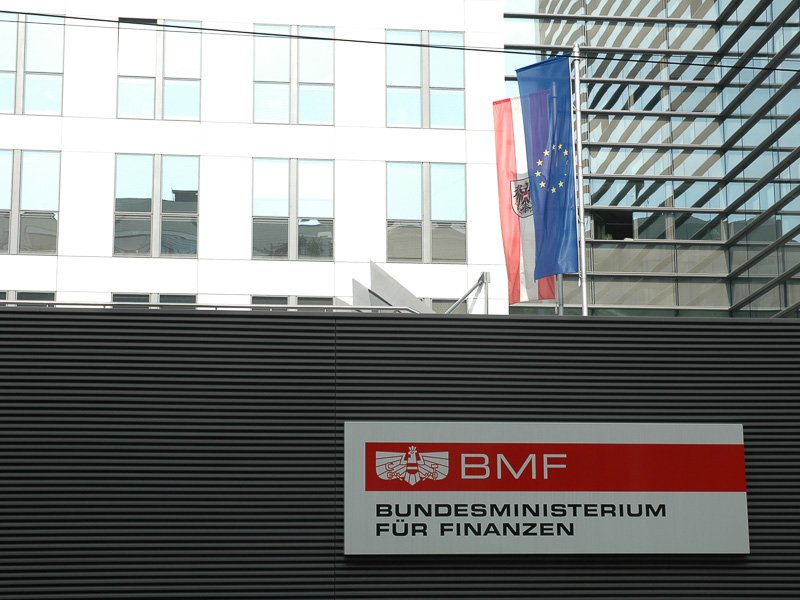
Image: © Anna Blau - BMF
© ebit Steuerberatung GmbH | Client Information