
Clarifications through the Maintenance Decree 2017 on the Association Guidelines
Through the extensive Maintenance directive 2017 on club guidelines were statutory changes such as those by the Non-Profit Act 2015 incorporated and general Clarifications encountered. Selected aspects of the changes, which are largely to be judged positively, are presented below.
Breach of the principle of immediacy
Arguably the most significant change brought about by the 2017 maintenance decree is evident in the Breach of the principle of immediacy, making it for the Charity of an association - in short - Not more Absolutely essential is that the The association operates directly for charitable purposes. will become. So far was in fact the Fundraising for other associations that then promote immediately beneficial purposes, detrimental to favourable treatment. Therefore, "pure fundraising corporations" charitable and their charity events or comparable activities to be tax-advantaged. The requirements for such often charitable "Service clubs" are still, that the Beneficiary entity eligible for donations is and largely by the fundraising and recipient organisation the same purposes pursued. Furthermore, it must Possibility of onward transfer of funds expressly in the Legal basis (embedded in the club's articles of association (of the service club) and a express dedication However, this is not necessary if the overall transfer of funds De minimis limit of €1,000 does not exceed.
Sociability up to £100 per club member
The partly stringent requirements, to the Charity to obtain and maintain club membership are emphasised in the Maintenance Decree 2017. Thus, a club is required to Promotion of sociability and entertainment, non-profit. On the other hand, such activities are also not detrimental to charitable status, provided they are of only entirely subordinate importance. Such an entirely subordinate encouraging sociability and entertainment is still given, if pro club member not more than €100 per year for appropriate purposes such as Christmas parties or excursions. The promotion of leisure activities and recreation for particularly vulnerable individuals – such as within the framework of Care for disabled people is a matter of course charitable.
"Small and large club festivals"
In accordance with administrative practice, Social events by clubs fundamentally in"small" or"large" Club festivals divided, with a Small club festival a dispensable Auxiliary operation depicted and a Big club festival also detrimental to favourable treatment which was classified. With reference to the Tax Amendment Act 2016, the Maintenance Decree 2017 now specifies the Prerequisites for a small club festival, where there is no risk to the tax-exempt status of the association itself. An important aspect is that the Organisation and planning the festivity Above all through the Club members or their relatives. The free of charge With the help of (assuming pure reimbursement of expenses and normal catering/food) from non-members is harmless, as long as it happens to a minor extent. The club's policies in 2001 provided for a Materiality threshold from at least 75% - the subordinate co-operation of Non-members (i.e. up to 25%) can be achieved by Records ("Helper lists") can be proven. Some relief is now provided, as the term was previously interpreted more narrowly than "close relatives" currently is. The predominant planning and execution of the festival by club members reaches its limits where activities must be carried out by professionals (e.g. security or conducting a fireworks display) or where the activities are unreasonable for the members.
Catering and entertainment performances as musical, show or dance performances are important parts of a celebration, which is why they are equally important for them Principle that they Essentially of the Club members provided or carried out. The Maintenance Decree 2017 clarifies that in the case of Catering outsourcing e.g. to one Innkeeper whose activity is not considered part of the club festival and to be considered separately e. Regarding the Entertainment performances as musician and artist groups (non-members) then advantageous, when she no more than €1,000 net per hour charge. What's new is that on the actually opposite the club charged Fee to be switched off. Finally, also the Duration of (the little) Club festival significant, whereby the continuous operation does not exceed 72 hours in total per year The preparation and follow-up activities are fundamentally irrelevant in this regard. The 2017 maintenance decree brings relief for associations with legally independent territorial sub-divisions, such as local groups. The duration of 72 hours per calendar year, that is separately to measure for each of these territorial subdivisions, thus creating a sort of Multiplication complicity come. Can all these Prerequisites not cumulatively met werden, liegt ein ""big club party"" and justifies tax-disadvantageous operation. When it comes to the duration of a club's festivities, attention should also be paid to the fact that not overall (small and large club festivals combined) the maximum permissible 72 hours per year exceeded will be, as, in accordance with the club’s guidelines, this is then considered a unified economic business operations (i.e. it must be assumed that this is, in effect, a single large club event that is detrimental to the beneficiaries).
Punch stand
Does a non-profit organisation run a Mulled wine stand, this involves a ancillary non-privileged ancillary support operation, provided that the Purpose of donation clearly recognisable. "Technically speaking," those provided free of charge by club members Food and drink Donations (and no taxable income), which are tax-deductible irrelevant are. The Maintenance Decree 2017 makes an exciting statement in that the Profit for such punch or mulled wine stalls, 10% may be used to estimate the operating income (sales revenue) generated, provided that, for the purposes of determining the profit, insufficient documentation are available. If the proceeds from the punch or mulled wine stall significantly exceed the fair market value of the food or drink on offer (more than 100%), this portion must be disregarded when calculating profits and treated as Donate to be valued. Often, at such charity events, in addition to food and drink for donations, money can be collected in separately placed Donation boxes eingeworfen werden. Such genuine donations do not represent operating income either.
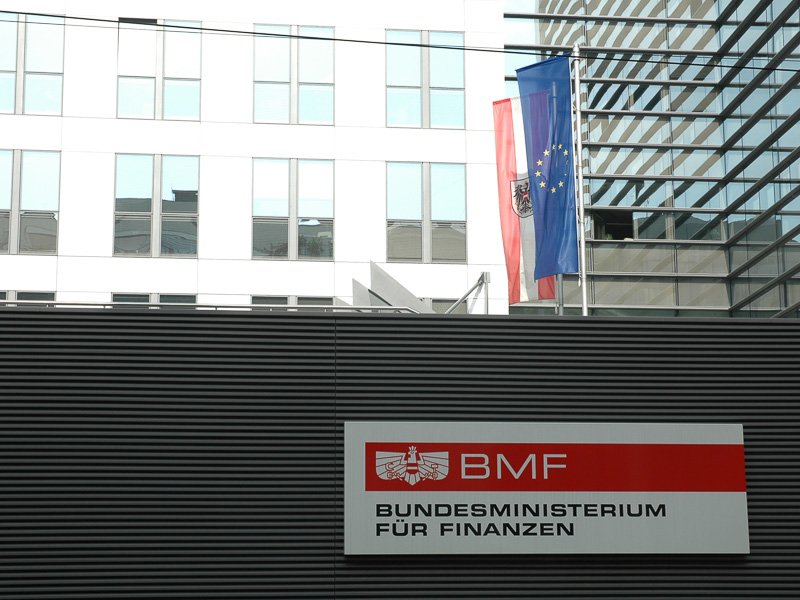
Image: © Anna Blau - BMF
© ebit Steuerberatung GmbH | Client Information