
Current flood disasters - BMF info on tax relief
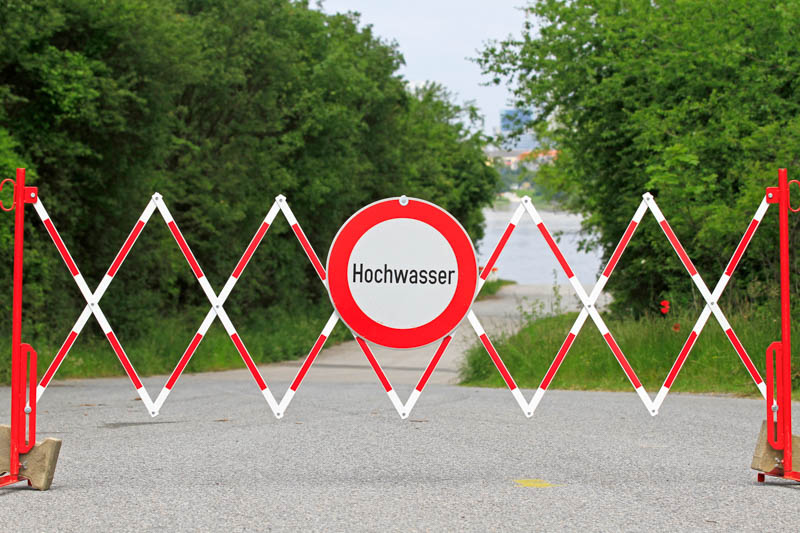
In response to recent disasters caused by floods and landslides, the BMF has listed in an information document (GZ 2023-0.599.910 of 21 August 2023) tax measures intended to provide (tax) relief to those affected and those providing assistance. These are presented in summary form below.
Extension of deadlines
Since difficulties can arise in connection with natural disasters regarding the compliance with tax filing deadlines, justified requests for extension of the deadline for filing tax returns can be submitted (for example, regarding a monthly UVA). Likewise, an application for extension of the appeal deadline can be submitted.
Relief for tax (pre)payments
To counter liquidity shortages or difficulties in meeting payment deadlines, the BMF Info proposes the following possible measures.
- Application for deferral or installment payment or application for a new installment payment in accordance with the COVID-19 installment payment model.
- Application to avoid the assertion of late payment, provided that a installment payment agreement or deferral arrangement is already in effect.
- Application for reduction or non-imposition of late payment penalties if a due payment could not be made in time due to the natural disaster.
- Application for non-imposition of late payment penalties, provided that the deadline for submitting a return due to the natural disaster was not observed.
Furthermore, the application for a reduction in the advance payments for income and corporate tax (see the article in this issue for more information) can be submitted by the taxpayer until October 31st for disaster damage (instead of September 30th). This tax relief is broad in scope, as those affected by a disaster can also apply for a reduction indirectly.
Payments from the disaster fund and voluntary contributions from third parties are tax-free
The BMF-Info emphasizes that benefits from the disaster fund as well as benefits from non-profit or charitable private foundations are tax-free. When it comes to tax-free subsidies, such as those from the disaster fund, it is important to note that the subsidies are deducted from the tax-based purchase or production costs, which also reduces the AfA. Voluntary contributions to the removal of disaster damage are tax-free on the recipient side. Examples of such voluntary contributions include, for example, money, a non-interest-bearing loan from the employer, or a donation to a household affected by the disaster.
Donations and contributions to the elimination of disaster damage
In principle, donations up to a certain amount are tax-deductible as operating or special expenses if they are donated for eligible purposes and to a qualified institution. Eligible institutions include, for example, various relief organizations or voluntary fire departments. In the present case, assistance in national and international disaster situations is also considered a qualifying purpose - particularly in cases of flooding, landslides, mudslides, and avalanches. It should be noted that direct donations to affected individuals cannot, however, be claimed tax-deductible.
Companies also have the option – unlimited in amount – to deduct aid in cash or in-kind that is provided in response to acute disasters at home and abroad as operating expenses. Provided that the aid is effective in promoting awareness, which generally does not require excessively high standards. For the tax-deductibility of aid that is effective in promoting awareness of disasters, it is irrelevant whether aid organizations, municipalities, their own employees, etc. are the recipients of the donations.
General tax benefits
Investment incentives can provide relief in the event of flood-related disasters – particularly for necessary replacement purchases and the removal of economic assets from the operating assets due to flooding. For replacement purchases, the general tax investment incentives such as the linear and the degressive depreciation for non-expendable fixed assets can be claimed. For the construction or acquisition of buildings of the operating assets, accelerated depreciation can also be claimed under certain conditions. It should be noted that repair or maintenance costs do not constitute a manufacturing cost.
When purchasing or manufacturing economic goods of fixed capital assets, the investment allowance can also be claimed as business expenses (a minimum usage period of 4 years is required). Alternatively, the investment-related profit allowance is possible for eligible economic goods. For economic goods disposed of from the operating assets due to high water, no post-tax adjustment is made under the investment allowance or the investment-related profit allowance if the minimum retention period of 4 years has not yet been met (no post-tax adjustment in the event of disposal due to force majeure). In addition, special regulations apply to income from forest use following the high water, which provide for relief measures.
Exceptional burdens in terms of flood damage
Costs incurred in the cleanup of disaster damage are tax-deductible as extraordinary expenses (without a deductible amount) provided that they are unavoidable. However, it should be noted that according to the BMF information, the own labor performance cannot be taken into account for tax purposes due to a lack of a cost outlay. The same applies to subsidies from public funds such as the disaster fund.
To claim tax-deductible expenses as extraordinary expenses, it is required that the relevant tax office be provided with the records of the damage collection carried out by the community commission. In addition, the costs themselves must be documented by invoices. BMF Info also discusses the practical handling of the deductibility of replacement purchases as extraordinary expenses. For example, in the case of apartments, the replacement purchase costs for the main residence (in the sense of a residential unit with comparable usage possibilities) are fully deductible as extraordinary expenses. However, this does not apply to secondary or additional residences, garden sheds, etc. Similarly, rental costs for a temporary accommodation can be deducted tax-deductible. If a loan is taken out to finance the tax-deductible costs, the repayment of the loan that is attributable to these costs, plus interest, is eligible as an extraordinary expense.
Tax exemption notice
Until October 31, employees can apply to the tax office for the issuance of a special allowance payment notice. The prerequisite is that the (likely) expenses incurred due to disaster damage that meet the criteria for extraordinary hardship.
Elimination of fees and federal administrative charges
Fees are waived for the necessary replacement of documents subject to payment of fees, such as passports, driver's licenses, registration certificates, business licenses, and also documents issued or submitted in connection with damage assessment, damage settlement, and damage compensation (such as building permits or vehicle registration certificates). To qualify for this benefit, the application and proof of damage must be submitted within one year of the damage occurring at the appropriate authority. Official actions caused by catastrophic damage such as flooding are exempt from federal administrative fees.
No fixed amount for the purchase tax
In the event of a state of emergency caused by a force majeure event such as, for example, a flood disaster, the tax authority may waive the imposition of the land acquisition tax on the purchase of a replacement property, in whole or in part. To qualify for this benefit, several conditions must be met, such as having moved to that location within 4 years of acquiring the replacement property.
Image: © Adobe Stock - Manfred Schmidt
© ebit Steuerberatung GmbH | Client Information