
Zero-Based Budgeting - a paradigm shift for financial management
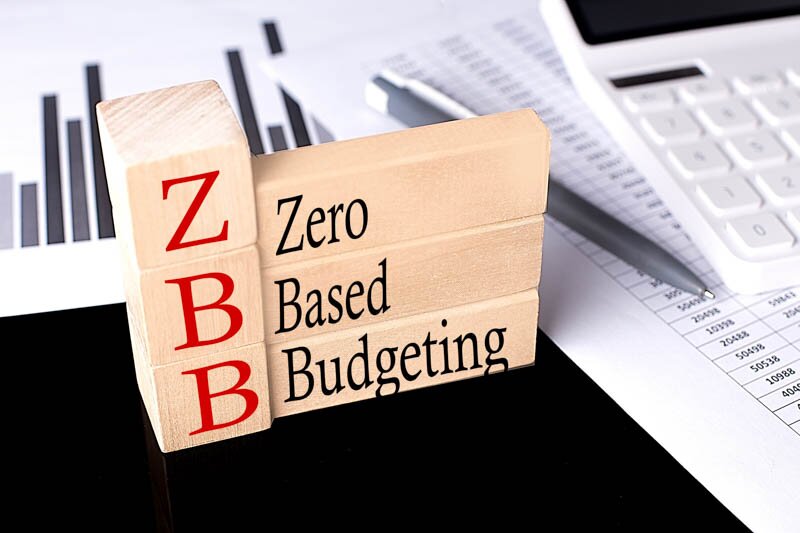
In times of volatile markets and an approaching wave of insolvencies, companies are under increasing pressure to increase efficiency and better control costs. In this context, attention should be paid to "Zero-Based Budgeting" (hereinafter "ZBB") once again. This radical approach to budget creation was developed back in the 1960s to guide investments logically while creating the necessity to examine every possible expenditure category for its efficiency and effectiveness. However, this budgeting approach fell somewhat by the wayside in the interim due to the volume of information and documentation required. It was criticised that this method of budget creation was too complicated and time-consuming, and also made future planning difficult.
Zero-Based Budgeting: An Overview
Unlike traditional budgeting models that are based on historical data, ZBB literally starts from "zero" at the beginning of each new budget year. Every cost item must be justified from scratch and underpinned with its strategic necessity and benefit for the company. This involves not only reviewing the amount of expenditure but also questioning its appropriateness and efficiency.
This approach forces organisations to rethink entrenched routines and critically question the use of their resources. This is quite unlike often traditional budgeting, where the previous period's budget serves as the starting point and each new budget typically increases slightly compared to the previous period. Moreover, in such a system, often only new expenses need to be justified, not recurring ones. ZBB creates a high degree of transparency, which allows for more effective cost control and the more efficient deployment and redistribution of resources. In this respect, ZBB is more than just cost reduction.
What implementation steps does the zero-based budgeting process go through?
- Definition of budgeting objectives and available resources by management.
- Formation of decision-making units (e.g. at cost centre level) and transactions: each unit creates "budget packages" that detail its activities and the resources required for them.
- Formulating alternatives for each activity and, consequently, selecting the most cost-effective alternative.
- Assessment and Prioritisation: Leaders assess the budget packages and prioritise them based on strategic relevance and cost-effectiveness.
- Distribution of available funds across prioritized decision packages and approval of selected decision packages.
- Implementation of the agreed measures in the budgets.
- Employee training and engagement: ZBB's success is largely dependent on employee support. Training and transparent communication are crucial to minimise misunderstandings and resistance.
What are the benefits of the ZBB method?
A key advantage of ZBB lies in its focus on strategic priorities. ZBB thus regularly enables companies to deploy resources in a targeted manner where they create the greatest added value. As past expenditure is not automatically carried forward (for the future), the organisation can redefine its priorities and set out its strategic objectives more clearly. Similarly, the ZBB method can lead to significant cost reductions by identifying potential savings (unnecessary or redundant expenditure) that are often overlooked in conventional management approaches. Some companies report savings of between 10 and 25 % of their operating costs in the first year of implementation.
The promotion of innovation and agility is also a typical advantage of the ZBB method. Instead of tying up resources in routine expenditures, ZBB creates scope for investments in innovative projects that foster growth and competitiveness. Improved transparency and control through ZBB can also be advantageous. The detailed budgeting process makes sources of cost visible and helps managers make more informed decisions. Finally, an increase in accountability can also be an advantage through ZBB. As each department head takes responsibility for justifying their costs, a greater awareness of efficient resource management is created.
What are the disadvantages associated with ZBB?
However promising the benefits may seem, implementing ZBB is no easy task. Companies face a number of challenges, such as the following:
- High expenditure of time and resources: ZBB requires a detailed analysis of every cost item, which can be very time-consuming, especially in large organisations with complex structures.
- Cultural resistance: the transition to zero-based budgeting often means questioning long-standing habits and processes. This can lead to resistance from employees and managers, especially if zero-based budgeting is perceived as a mere cost-saving measure.
- Difficulty in Prioritisation: Identifying and weighting the most important strategic priorities can be challenging, particularly in dynamic markets or companies with diverse business units.
- Necessity of robust data and analysis tools: accurate cost analysis requires companies to have reliable data and effective analytical tools.
ZBB as the Key to Sustainable Success?
Zero-Based Budgeting is more than just a cost-cutting tool – it is a philosophy that forces businesses to look at their resources with a critical, strategic eye. In an era where agility and efficiency are paramount, ZBB can offer a clear competitive advantage.
Whilst the introduction of ZBB does require a significant investment of time, resources and cultural change, the long-term benefits – ranging from more transparent processes and reduced costs to a stronger focus on strategic objectives – make ZBB an indispensable part of modern management. Companies that are prepared to radically rethink their approach to budgeting can benefit significantly from ZBB – both now and in the future.
Image: © Adobe Stock - Iryna
© ebit Steuerberatung GmbH | Client Information