
Tax initiatives of the new federal government
At the end of February, the new federal government presented its government program (2025-2029). As expected, the fiscal plans and targets are also characterized by savings - See the article in this issue for more information.. In addition, there are also plans for relief, simplifications, and measures to reduce bureaucracy. Important aspects are outlined below. The corresponding legal implementation remains to be seen.
Adjustment for inflation in the income tax rate - 1/3 is suspended
In the context of the fight against cold-proportionality ("silent tax increase"), since 2023 2/3 of the inflation rate is being offset by adjusting income tax rates. 1/3 of the inflation rate is now to be postponed. It remains unclear what will happen with the third third, which is basically reserved for discretionary measures.
Expansion of the scope of the lump-sum arrangements
The base flat-rate scheme is set to % increase the sales threshold to €320,000 from 2025, and the flat-rate business expenses allowance from 12 % to 13.5. A further increase is set to take place in 2026 with a sales threshold of €420,000 and a business expenses allowance of 15. % It remains to be seen whether changes will also % be made to the flat-rate business expenses allowance of 6, and how the planned increase in the VAT flat-rate allowance will be handled.
Adjustment of luxury car quotas for passenger cars
The adequacy threshold is to be raised to €55,000 from 2027 onwards. The target value of €65,000 as the adequacy threshold is dependent on budget developments.
Increase in tax-exempt profit allowance
The profit tax allowance is to be increased uniformly to 15 % - the maximum amount of the profit tax allowance is to be increased (from the current €33,000) to €55,000.
Improvements in depreciation
New depreciation options – subject to budget constraints – should be examined; existing depreciation options can also be modified (in terms of amount and duration/speed).
Making the transition to a new company easier
In accordance with the government program, the exemption for sales proceeds is to be increased to €45,000 (from €7,300 currently). The preferential half-tax rate for extraordinary income is to be possible in the future without cessation of employment ("prohibition of employment").
Tightening of regulations for foundations
The foundation entrance tax and the equivalent entrance tax are % increased % to 3.5, and the intermediate tax is raised to 27.5, which results in a significant restriction of the tax benefits for foundations.
Elimination of the climate bonus and partial compensation for commuters
It has been known for a long time that the climate bonus will be abolished by the new government. For 2026, a partial compensation for commuters is planned, which could take the form of a commuter voucher. In return, the kilometer fee for bicycles and motorcycles will be reduced to 25 cents.
Increase in other allowances
According to the government program, an increase in the allowance of €620 for other allowances (13th and 14th salaries) is planned.
Reduction of the employer contribution
Reducing the cost of employee benefits is always a hot topic and is therefore also on the agenda of the new federal government. Under budget constraints, the employer contribution, currently 3.7 % %, is to be gradually reduced to zero % by mid-term of the legislative period.
Changes to the property acquisition tax
A reform is also being considered for the property purchase tax, also with the aim of achieving a more effective taxation in the context of share deals and thus generating additional revenue (through an increase in property-related traffic taxes). On the other hand, on the first property acquisition, both the GrESt and state-related fees are to be eliminated (as already in the land registry registration fee for first-time purchases of up to €500,000).
Valuation of federal fees
The planned valuation of federal fees (the last time this was done was in 2011) is to be revised, which would % result in an increase in fees of over 40%.
Simplifications in the documentation requirements and the duty to provide information
The new government program provides for simplifications in the registration desk and the goods receipt book (sometimes also a simplification of the "cold hand policy"). Furthermore, the obligation to issue a receipt for purchases up to €35 is to be eliminated. A digital receipt is to serve as an alternative to the printed receipt – however, at the customer's request, a paper receipt must be printed.
Succession plan for the educational leave
As mentioned elsewhere in this issue, the leave of absence in its current form will be discontinued. However, from 2026 onwards, a successor scheme will come into effect. This new model focuses on low-skilled individuals, increases the ECTS to be achieved, and aims to increase attendance requirements. Furthermore, the combination of parental leave and subsequent leave of absence that was popular in the past will no longer be possible.
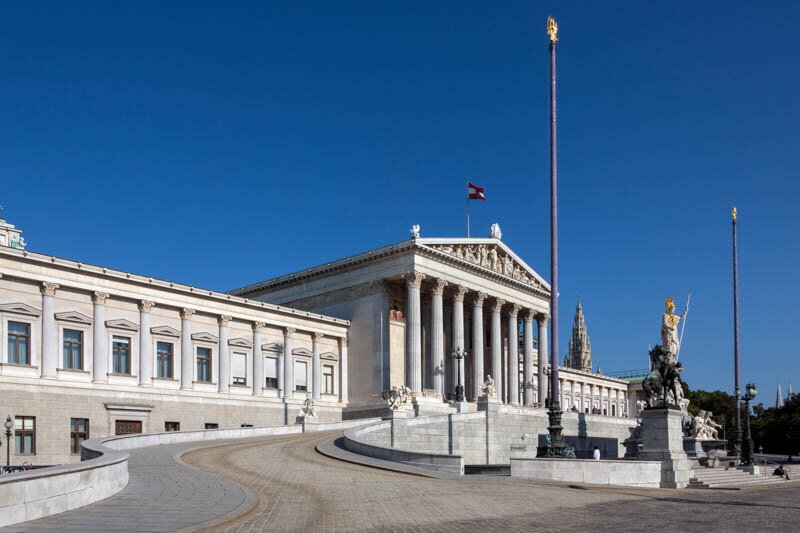
Image: © Adobe Stock - mrallen
© ebit Steuerberatung GmbH | Client Information