
Demolition costs of a residential building as an extraordinary expense?
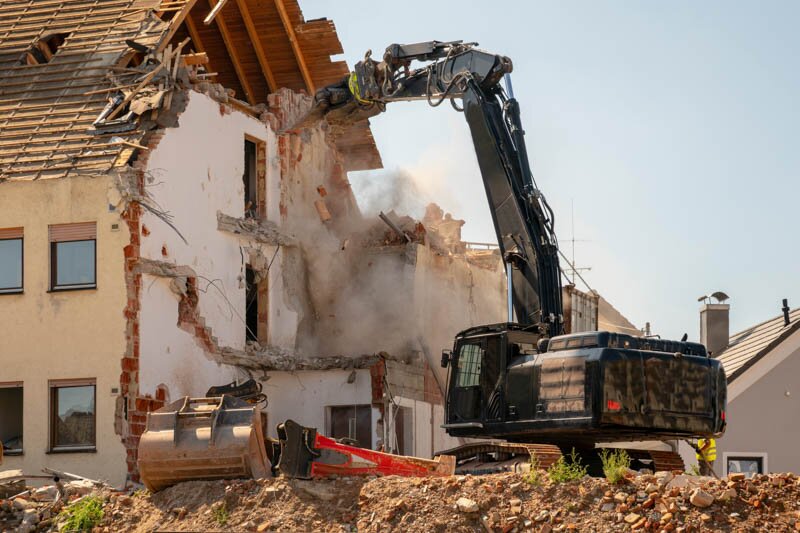
A taxpayer wanted to claim the demolition costs of a building as an extraordinary expense for tax purposes. The building was her former home, which was demolished after the father’s death due to extensive asbestos contamination. She justified her request by stating that she originally intended to renovate the house and rent it out, which had become impossible due to the health risks posed by asbestos. The tax office also rejected the claim that the costs incurred for this had already been paid earlier and could therefore not be deducted in the current year.
The BFG (GZ RV/7103068/2024 from 15.9.2025) concluded in this context that the taxpayer had been living in a newly built house on the same plot for a long time and that the old (asbestos-contaminated) building had been empty since the father’s death. Therefore, there was no compelling reason for demolition, as there was no immediate health risk and the building was not used as a residence. The alleged intention to rent out the property could not be convincingly proven.
Costs can only be considered as extraordinary expenses for tax purposes if they are exceptional, necessarily incurred, and significantly impair the economic performance of the taxpayer. The necessity of incurring these costs is to be assessed according to the circumstances of the individual case. The taxpayer may not be able to avoid the costs for reasons of fact, law, or morality. Therefore, extraordinary expenses are not to be considered expenses that are attributable to facts that were intentionally or grossly negligent by the taxpayer. This includes expenses that are the result of the execution of an unconditional inheritance declaration or the acceptance of a gift. Since the building was empty at the time of the demolition, the BFG assumed that it was demolished voluntarily, since the immediate need for housing was met by the adjacent building and therefore there was no immediate health risk. Furthermore, in view of the planned, no longer possible rental, a taken entrepreneurial risk can be recognized, which excludes the deductibility as an extraordinary expense.
This also does not change a previous court decision, in which the renovation costs for a building infested with house dust were recognized as an extraordinary expense. This was done only because the building in question was the taxpayer’s only residential property and therefore, without renovation, there would have been an immediate health risk to the residents. Finally, the BFG also rejected the claim of an extraordinary expense using the accrual principle, according to which costs can only be claimed in the year in which they were actually paid. Since all the demolition costs were already paid before the tax year, a tax deduction as an extraordinary expense was already excluded for this reason.
Image: © Adobe Stock - Wolfilser
© ebit Steuerberatung GmbH | Client Information